
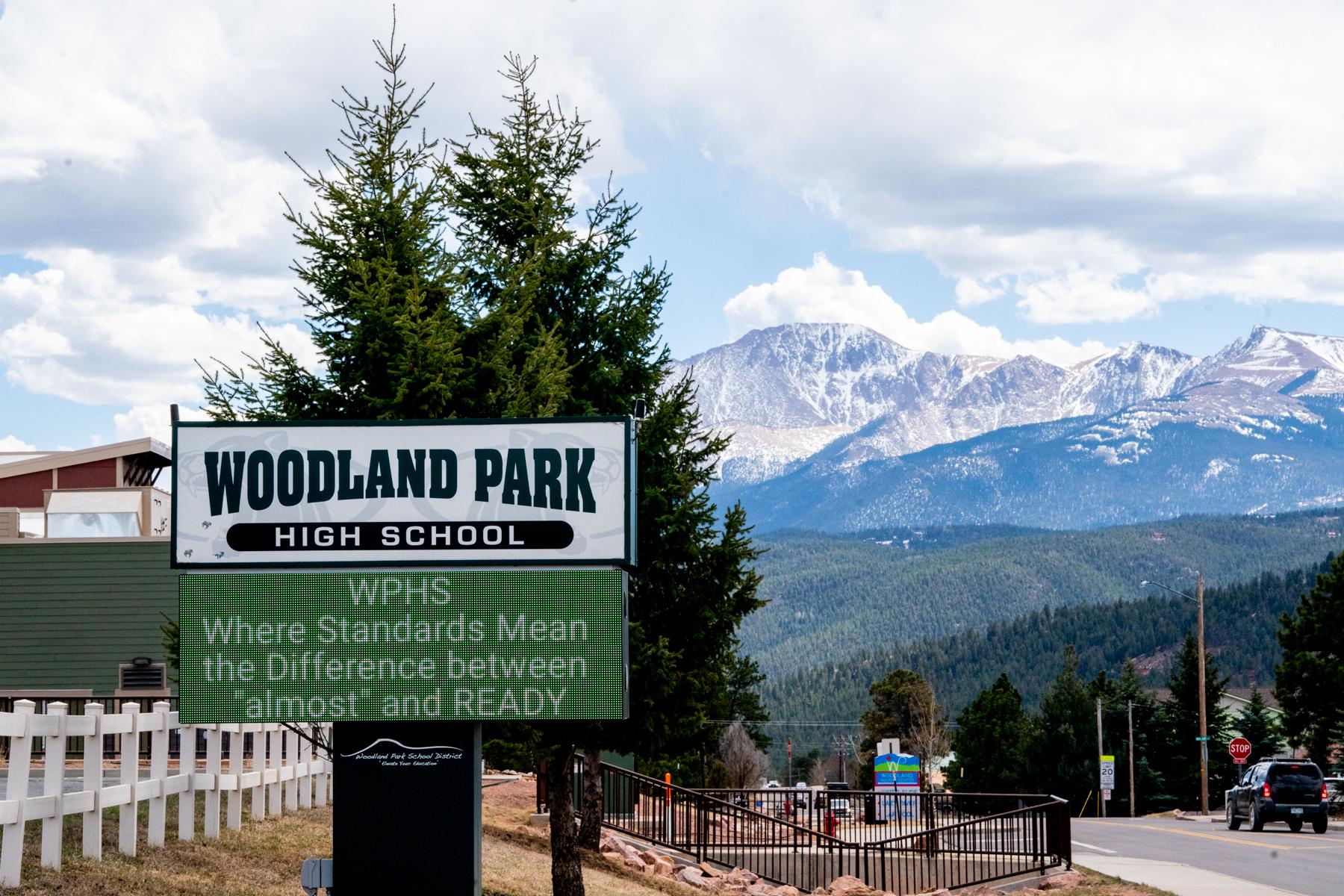
Do not make public agendas vague or bury controversial items under generic labels, or you risk violating Colorado’s Open Meetings Law and paying attorney’s fees.
That was the message to public bodies in a judge’s ruling last week after a years-long transparency battle.
District Court Judge William H. Moller awarded parent Erin O’Connell $144,822 in attorney fees and court costs after she successfully proved the Woodland Park School District board violated the state’s open meetings law.
The award followed a 2025 Colorado Supreme Court ruling that she was entitled to fees after proving a violation of the Colorado Open Meetings Law (COML).
Moller concluded that O’Connell’s suit “forced the school board to comply with the COML and to give the public the right to participate in policy-making decisions.” He said the case had “statewide implications,” underscoring that public bodies can be required to pay fees when they violate the open meetings law.
“It’s imperative that someone like Erin O’Connell, who successfully proves a violation, can recover their attorney fees and court costs or else no one would ever challenge a government that appears to have broken the law,” said Jeffery Roberts, executive director of the Colorado Freedom of Information Coalition.
The Woodland Park School District did not immediately respond to a request for comment.
The open meetings law requires that boards post “full and timely notice” of meetings, including specific agenda items when available, at least 24 hours in advance.
Violation of transparency rules
O’Connell filed suit after a January 2022 meeting in which the board approved a controversial charter school, Merit Academy, under a vague agenda item labeled “BOARD HOUSEKEEPING.” O’Connell argued the description failed to provide the "full and timely notice" required by law.
A Teller County district judge ruled that the board’s use of “BOARD HOUSEKEEPING” was a “conscious decision to hide a controversial issue” from the public. He found later meetings did not “cure” the violation because the board simply rubber-stamped its earlier decision.
Message to other school boards
The combined Supreme Court and district court rulings put school districts and other public bodies on alert that vague agendas and attempts to bury controversial items under generic labels can constitute violations of the law.
The order highlights two messages from the Supreme Court’s earlier ruling: The open meetings law focuses on whether a violation occurred, not on whether it was intentional and a public body cannot simply re-vote on an item later to avoid consequences.
The district’s lawyer argued the award should be around $40,000, contending much of the litigation was “fruitless.” But the judge rejected that position, finding O’Connell’s billing records detailed and reasonable.
"The position argued by the School Board would... have allowed this school board, and other public bodies, to violate the COML with relative impunity," Moller wrote in his order.
The court noted that the school district should bear the expense of what he called aggressive litigation.
The judge concluded that O’Connell’s case forced accountability on the Woodland Park School District board and reaffirmed the public’s right to participate.
“It’s not difficult – it’s actually very easy – for a school board or a city council or a county commission to tell the public ahead of time what a meeting is going to be about,” said Roberts. “The whole point of the notice provision in the open meetings law is to make sure the community knows that. No public body should purposely hide the topic of a discussion because it’s going to be controversial.”
The judgment will accrue interest unless the district appeals.
Other school board violations across Colorado
Several other Colorado school boards and local governments have been found in violation of the Colorado Open Meetings Law in recent years.
In the Elizabeth school district, a judge ruled in 2025 that the district violated the law by amending an agenda at the last minute to add a controversial policy that opposed mask and vaccine mandates. The item was added to the agenda just hours before a September 2023 meeting, missing the 24-hour legal deadline.
There have also been several high-profile cases of improper use of executive sessions labeled as personnel or legal matters but used for broader political or controversial discussions.
In 2023, a judge ordered Denver Public Schools to release the recording of a five-hour secret meeting. The court found the board used the session to engage in substantial discussion about returning armed resource officers to schools — a matter that should have been properly noticed.
In Douglas County, a judge ruled in 2022 that four members of the Douglas County school board violated the law by conducting a series of one-on-one private discussions to discuss firing then-Superintendent Corey Wise. The district was eventually ordered to pay more than $103,000 in legal fees and costs.