
A series of recent snowstorms is bringing some relief to dry ski slopes and snowshoe trails across the Mountain West.
Those precipitation events, however, won’t bring snowpack levels close to normal levels, according to a briefing organized by the National Oceanic and Atmospheric Administration on Thursday.
“These recent storms have helped, but they have not been enough by any means to recover from this snow drought due to the deficits that have accumulated since the beginning of the snow season,” said Dan McEvoy, a researcher with the NOAA’s Western Regional Climate Center.
Colorado has seen a record-breaking warm winter, impacting winter recreation and bringing fears of low Colorado River flows. While precipitation hasn’t been exceedingly low, the warm temperatures have caused snow to melt quickly, meaning snowpack hasn’t stuck around.
Barring a major turnaround, experts say it’s now almost guaranteed that snowpack levels across critical river basins will remain far below normal levels ahead of the spring runoff season.

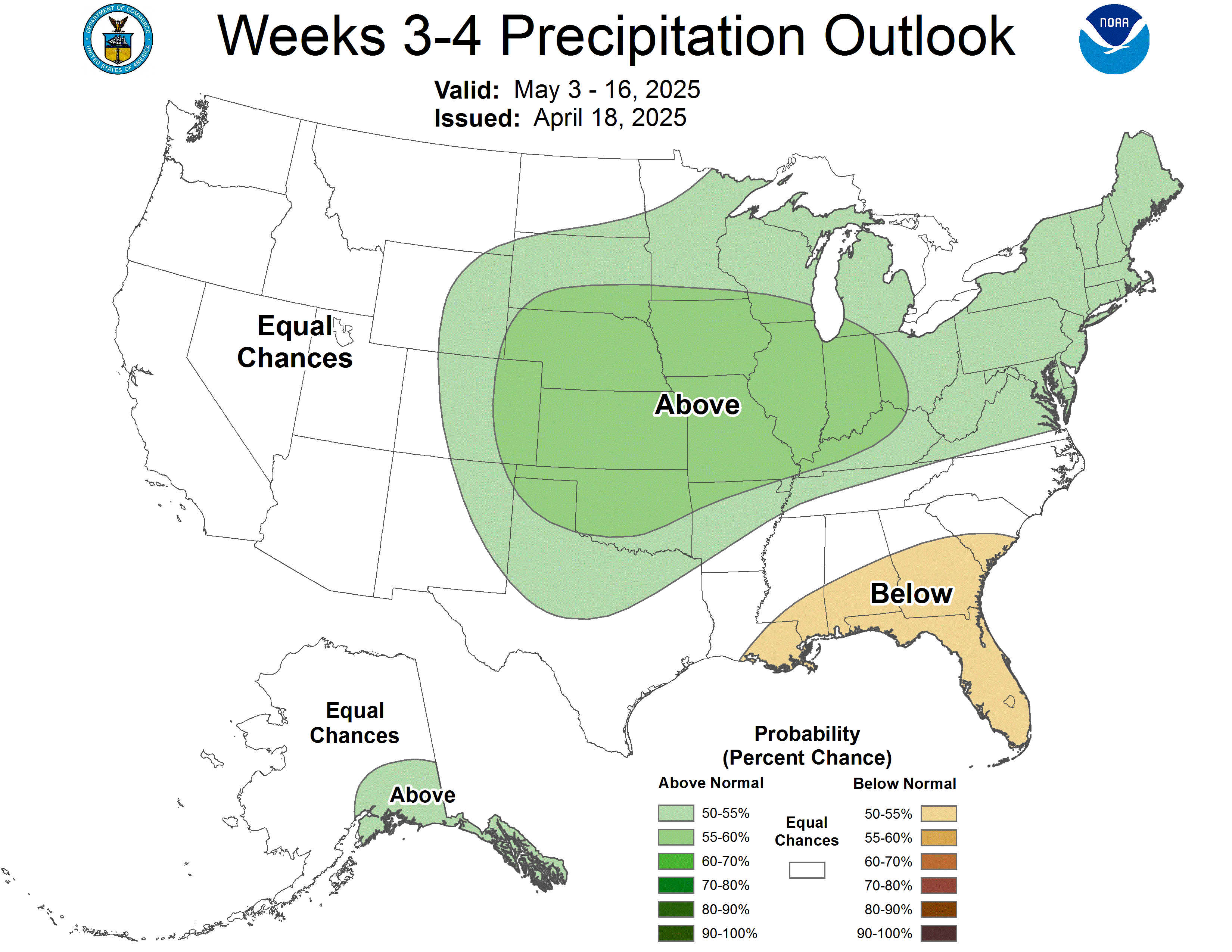
Projections based on past snow patterns suggest it’s highly unlikely that snowpack levels catch up to their normal peaks. Short-term forecasts also indicate the region will experience warmer and drier conditions over the next two weeks.
So far, this week’s snowstorms have brought seven inches to a foot to the central mountains, over two feet to the San Juans and up to a foot in Independence Pass.
“It's definitely the biggest amount of snow we've seen so far this winter. And unfortunately winter's almost over,” National Weather Service meteorologist Tom Renwick said.
Another 6-12 inches of snow is forecast Thursday night through Friday. “Is it going to put us back to a hundred percent (of snowpack)? Absolutely not, but anything is good at this stage of the game,” said Renwick.
The majority of the state remains in low to moderate drought, with portions of the mountain range in extreme drought. This is one of the worst snow droughts in the past 40 years for the Mountain West region, according to McEvoy.
The month ahead doesn’t appear to promise any relief. The NWS forecasts another potential snowstorm next week, but forecasters don’t anticipate enough precipitation to alleviate drought conditions in the state.
Bigger concerns linger for downriver water supplies in the Lower Basin come spring and summer. Millions of people in Nevada, California and other states rely on snowmelt in the Upper Basin. Water supply forecasts are well below normal. Most of the critical reservoirs in the Lower Basin are forecast to be at half or less of their normal capacity.
The recent storm pushed that up by a percent or two, but not enough to make a difference, said Paul Miller, hydrologist at the Colorado Basin River Forecast Center.
"There's a very low chance that we're going to see conditions that even get us close to average,” said Miller. Lake Powell is expected to be at only 38% of the 30-year average this spring.