Colorado’s state-run bus system has outgrown available funding following years of successful expansion.
At a recent state transportation committee workshop, leaders with the Colorado Department of Transportation (CDOT) laid out both the successes of Bustang’s growth in the 10 years since its inception, and the funding deficit now threatening to undermine it.
“Bustang was a great little transit service for the first eight years that it operated,” said CDOT’s Office of Innovative Mobility Director, Kay Kelly. “Our revenues and our expenses were very well aligned. But…it wasn't the transit service that Colorado needed.”
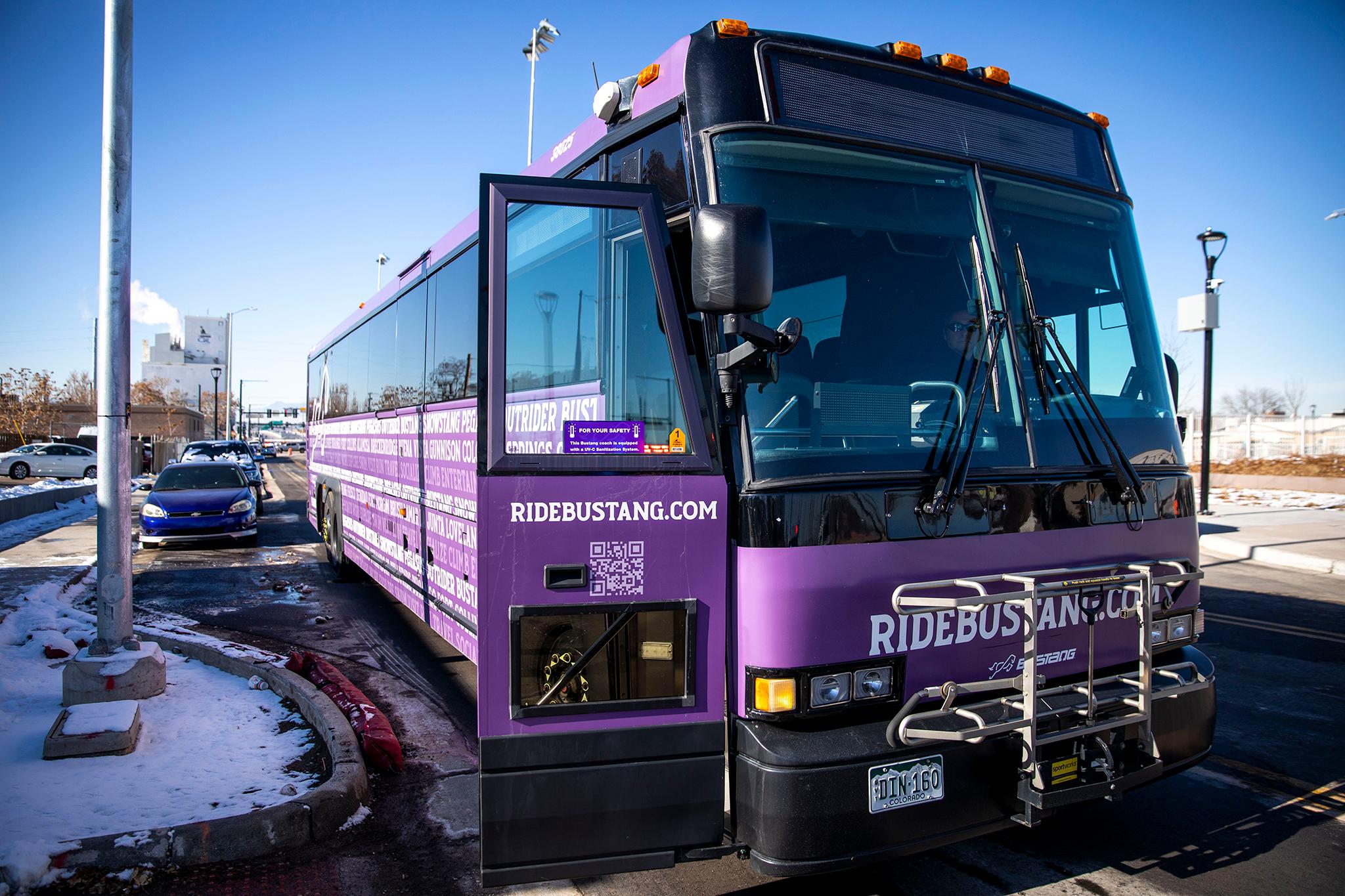
In 2015, Bustang launched as a commuter-focused service operating along the I-25 and I-70 corridors. In 2018, CDOT expanded the system by adding the Outrider network, connecting rural communities to essential services and larger urban areas. Then, in 2019, CDOT introduced Snowstang, a seasonal service that provides direct transportation between Denver and major ski resorts. Routes specifically to Empower Field at Mile High followed for sporting and music events.
But the system’s biggest change arrived in 2022, when lawmakers approved Senate Bill 22-180. The one-time $30 million cash allotment from that legislation plus funding from the American Rescue Plan Act allowed Bustang to expand services on its core corridors.
“That enabled us to move from that really limited service, that was really nice, but wasn't what we needed — into something that's better meeting the needs of our Colorado travelers right now,” said Kelly.
Before the funding, I-25 had six weekday round trips along both north and south corridors. The I-70 west line had four. After the funding hit, service more than doubled on I-25 and jumped to 15 daily round trips on I-70 west.
Leaders said the increase made a major impact on ridership over the next three years.
“We've been growing double digits year over year since essentially the bottom of the pandemic,” said Division of Transit and Rail director Paul DesRocher. “So 21% growth was what we posted last year. This is significant in that it helps us to achieve a greater farebox recovery.”
During the pandemic low point, Bustang carried about 70,000 passengers a year. In 2025, it carried more than 350,000 passengers. With the increase in riders and thus in fares, Bustang and Outrider currently bring in about $23 million a year, but according to CDOT, maintaining current service levels will require far more than that.
“If we just want to maintain the service that we're providing today, our annual operating budget needs to be about $47 million per year starting in fiscal year 2027,” said Kelly.
CDOT estimates Bustang will continue to grow by about 5% each year. That means their upcoming budget needs stand to increase to about $50 million, creating an estimated $28 million deficit in fiscal year 2027.
And — even without further expansion — the agency estimates a deficit of about $25 million in fiscal year 2027.
“Either way,” said CDOT’s chief financial officer, Jeff Sudmeier, “the message is clear. We have a pretty significant need for additional funding if we are to continue to offer the current expanded levels of service.”
Potential temporary funding solutions are under consideration
The department has come up with a creative budgeting solution to prevent them from falling off a fiscal year 2027, but it’s a short-term, one time fix.
CDOT said it could move existing funding from its Innovative Mobility program and the statewide Congestion Mitigation and Air Quality Improvement balances for a total of roughly $19.1 million to lower the projected gap in fiscal year 2027 from $28 million to $7 million.
Sudmeier said that would put the agency “within striking distance” of balancing next fiscal year, possibly through additional short-term measures or service adjustments. But — he was clear that internal funding shifts are not a long-term solution. “Existing CDOT revenue sources are not going to get us there in terms of closing the funding gap,” he said.
Two longer-term solutions being discussed include a potential partnership with the Colorado Transportation Investment Office to see if toll revenues or congestion impact fee revenue authorized under SB 24-184 could help support service.
Office leaders however, said toll revenues have corridor restrictions and that rail projects have priority on new congestion impact fee revenue.
Beyond the numbers, some commissioners raised broader questions about how Bustang’s finances are framed, potentially setting the groundwork for further legislative action.
CDOT District 3 Commissioner Juan Marcano asked the department to better demonstrate what consumer benefits of the service looks like rather than focusing solely on the red in deficit projections. “I don’t think that there is a single transportation system in the world that actually covers its costs,” he said. “Transportation services are a public service. It’s a public good.”
Officials said benefits include consumer cost savings, positive impacts to roads, greenhouse gas reductions and expanded access to transit — but no actual numbers were presented at the workshop.
For now, the core issue remains financial. The expansion funded by SB 22-180 and ARPA dollars drove ridership growth and expanded service statewide. But with that one-time funding expiring, Bustang’s ongoing revenues — about $23 million annually — fall far short of the roughly $47 million to $50 million needed each year to sustain today’s service levels.
As one official put it: “The question now is how do we account for those increased costs?” Official solutions — including any potential cuts to service — remain unclear, but a CDOT spokesperson told CPR News it’s likely the department will have an update by March 18 in time for the commission’s next meeting.