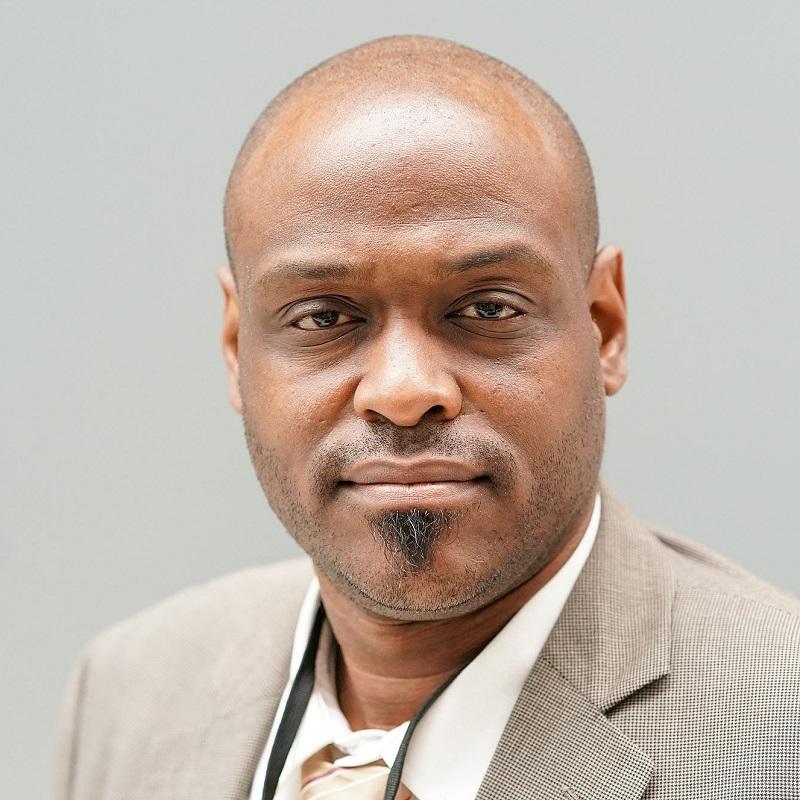

Even before the Trump administration’s current approach to immigration enforcement, University of Colorado Denver economics professor Hani Mansour found that deportations chill the economy for both immigrants and native-born citizens.
In a 2022 study, Mansour and a group of other researchers looked at the labor market effects of the Secure Communities program. The federal immigration enforcement program mandated that local police share data, like fingerprints, with federal agencies so they could detain and deport undocumented immigrants with a criminal history.
The current Trump administration is cracking down harshly on immigration, including expanding ICE’s ability to arrest people and detaining a record amount of individuals. Professor Mansour spoke with Colorado Matters senior host Ryan Warner about what the consequences of Secure Communities suggest about the country’s economic future.
This interview has been lightly edited for length and clarity.
Ryan Warner: You find effects for both those deported, immigrants who remain, and for citizens, I suppose. Let's start with the latter two. What are the effects on the economy that the detained or deported person leaves behind?
Hani Mansour: Undocumented and documented immigrants' lives are mingled, right? They live in shared households, they have shared experiences. It's possible undocumented immigrants are now more afraid of going out, but their family members are also more afraid of going out regardless of their status. And of course, in today's environment, you might be worried about being profiled. That means you might not commute as long to work. You might avoid some job opportunities that you would have taken otherwise. And let's remember that immigrants themselves are consumers, so maybe they're not going out, they're not shopping, they're not going to restaurants as much as they would. Both because they might not have as much money and because they're afraid of interacting with local police.
Warner: I think what you're describing is a “chilling effect.”
Mansour: Exactly right. And that's what we call it in the paper. It's the fear of interacting with local police or ICE agents, which essentially means you're more likely to stay inside rather than go out into the world either to work or have fun.
Warner: That chilling effect, it's obviously measurable; is it significant?
Mansour: It is pretty significant, and that's why also we see an impact on native workers, who are not immigrants. The fact that immigrants, regardless of legal status, are not engaging in the labor market as much ends up impacting the labor outcomes of native workers as well.
Warner: This is what surprises me most, I think, about your findings; the spillover effect, if you will.
Mansour: We know that undocumented immigrants work in very different occupations than native workers. They occupy lower-wage, relatively undesirable jobs. Some native workers might take these jobs, but likely at a higher cost. It becomes more expensive for employers to hire. Think, for example, about a construction company. It doesn't have the pool of laborers that it used to, and now it has a smaller pool at a higher cost. In that case, they might not take that next project they might have taken otherwise, which means that they're going to hire fewer managers, fewer architects, fewer engineers, and all of these occupations are typically occupied by native workers. Although some workers might benefit, especially those who are most substitutable to undocumented immigrants, the average American worker is going to hurt quite a bit, meaning fewer job opportunities and lower wages.
Warner: And again, are these significant impacts?
Mansour: We estimate that for every one deportation, there's going to be a 0.8 reduction in jobs available for native workers. In Colorado, the share of undocumented immigrants is about 4%, about 140,000 workers. If we deport 20% of them, that's about 28,000 deportations, which we estimate would imply about 21,000 fewer jobs for native workers. I would argue that's pretty significant and large.
Warner: Your findings are based on a previous chapter of the United States’ somewhat frenetic, chaotic immigration policy. Your findings are not new, but they strike me as largely unexplored. Do you think that's true?
Mansour: The economic profession itself has long studied the impact of immigration. The majority of studies have found that immigrants and natives tend to complement each other rather than substitute each other. We studied this program a few years ago just because we thought it's an important episode to study. One of the main things about Secure Communities and the way it was implemented is that it was based on increased information sharing between federal forces and local police.
Warner: Yes, this was the height, and Colorado was involved. When locals and immigration officials were highly cooperative. It was a different time.
Mansour: This program was rolled out across counties over time, so not all at once, but essentially counties did not have an option to opt in or opt out. Everyone had to comply with this new regime of information sharing. In practice, imagine that you get stopped for a traffic violation.
Warner: Because the Colorado State Patrol, I remember, was deputized under this.
Mansour: That's exactly right. They sent, for example, your fingerprints to the FBI to check if you have any criminal record. And they were able to send those fingerprints to ICE to figure out whether the person had overstayed their visa or crossed the border illegally. That was pretty unique, which then led to a lot of people being deported. We thought it was interesting to analyze because a lot of studies have analyzed what happens when immigrants come in. It was really important for us to analyze what happens when immigrants go out. There's no reason to expect that those two effects should be the same.
Warner: This cooperation remains in some communities and in others, there has been a distancing from this. A lot of Colorado communities are a case in point for that.
Mansour: That's what essentially brought to life the idea of sanctuary cities. But that happened after Secure Communities was rolled out precisely because of this idea of deputizing local police to share information with federal agents.
Warner: So are you using this current moment, this different moment, as an opportunity to study?
Mansour: Not yet. It's a little bit too soon for us to know what's happening. Hopefully the study on Secure Communities gives us some important insights. One of my coauthors is studying just the nature of deportations. One of the main things that we also provide evidence for in our study is that the intention of the program to begin with, like it is right now, was to deport and detain undocumented immigrants with violent criminal histories.
Warner: We know, by the way, about the current action, that is not always the case.
Mansour: That wasn't the case even back then. Although that was the intention, it quickly evolved into something more than that. We have some statistics showing that over 60% of those who were detained did not have a violent criminal record, and 20% of them didn't even have a criminal record. That tells you a little bit about the profile of those who are actually getting detained and deported. I imagine given the more aggressive tactics ICE is using right now, it's even more true that people without any criminal records are those who are being deported.
Warner: Now, inherent in this is the idea of immigrants doing jobs that others won't. An argument that this creates a shadow class or a second-class American. Are you assuming that there has to be a working class that must be exploited for cheap labor?
Mansour: It's true that undocumented immigrants have less bargaining power. They have less rights, they are under threat, and that gets exploited in terms of the wages we pay them. The other perspective, of course, is that a lot of newer immigrants might not have the same skills and might have to be trained. That's partly why they're being paid less. Both of these components, the lower bargaining power and potentially different skills, might lead to them having lower wages. I don't have a stance on that. I think workers should be compensated fairly, but the fact that they are being paid less and have to be substituted with higher wage workers creates this ripple effect. It seems the solution to fixing the wage issue is to fix the immigration issue.
Warner: That's the elephant in the room, if you will, what it would mean to bring these folks out of the shadows, essentially to legitimize them.
Mansour: There are studies out there from other contexts in Europe and also from the naturalization that happened in the early eighties. Most of these studies don't find that these naturalizations or legal pathways for immigrants lead to lowered or worse job market outcomes for native workers. Partly because the economy is not a zero-sum game. When you bring economies outside of the shadows, that means that they're able to gain maybe more skills than they would otherwise.
Warner: Makes me think that the conversation we have about immigration, certainly the messages we hear about immigration just lack such nuance.
Mansour: They do, but my sense is that couching them in simple economic arguments about immigrants hurts your outcomes. That's a very simple message that, unfortunately, might resonate with a lot of people. And it's almost a means to an end when likely the reasons behind the anti-immigration wave in the US and in other countries is probably couched in other sentiments.
Warner: Other sentiments … it's an elegant way of putting nativism or racism or xenophobia or white supremacy.
Mansour: Those could be some of those reasons.
Warner: A removal then has an economic impact, you're saying a deleterious one for the nation doing the removing, but the argument also goes that you might be removing someone who is sucking up services; perhaps racking up hospital bills or requiring taxpayer investment. Would you share just a few words about that before we go?
Mansour: The only perspective I have on this is that undocumented immigrants, and documented immigrants who might be impacted by this, both pay taxes. A lot of people are under the impression that immigrants don't contribute to the tax base. And that's simply incorrect. You can file taxes without having a Social Security number, for example. So they do contribute to the economy, not just through the output they produce and the benefits of that to the economy, but also through taxes.
Warner: Meanwhile, they remain ineligible for many federal and state programs.
Mansour: The other misconception is that (immigrants) are ineligible for basically every other federal program. Some states allow some benefits to undocumented immigrants. I think that's true in Colorado and California, for example. But they're very limited compared to the rights and benefits that native workers get.