
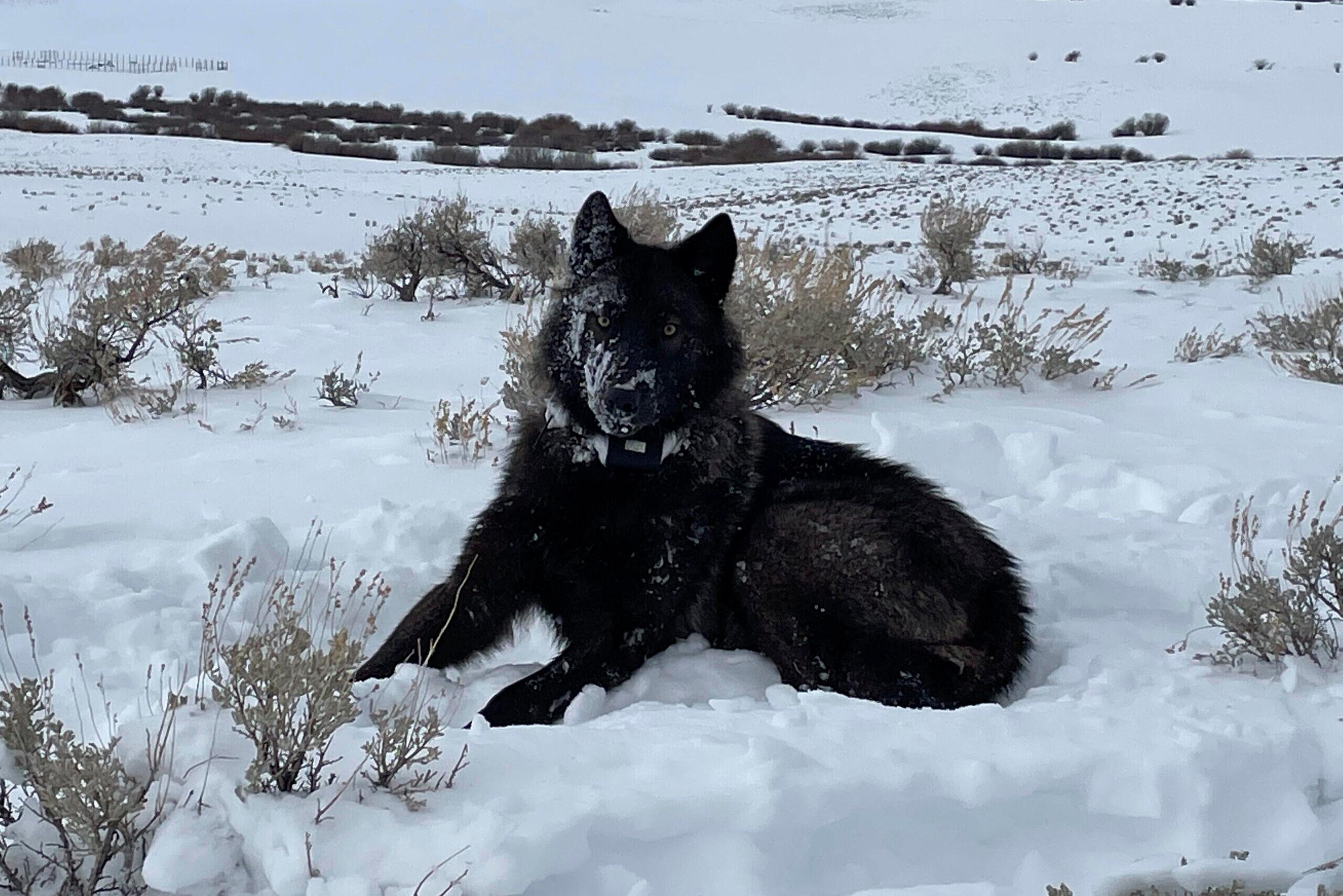
Last month, a couple of lone gray wolves may have traveled farther east than the animals ever have in Colorado since reintroduction in 2023.
The latest map of collared wolf activity released by Colorado Parks and Wildlife shows which areas wolves passed through from late January through late February. During that period, wolf activity spread further east into southern Front Range counties, from Douglas to Huerfano. Movement appears to move as far east as Interstate 25, south of Pueblo.
However, CPW’s maps have some limitations. They define regions by state watersheds, and track collared wolves with GPS pings, which ping only about once every four hours. So wolf detections may just indicate an animal passed through, not that they are moving into an area or establishing there.

Brenna Cassidy, CPW’s wolf monitoring and data collector, said she has not heard of an increase in wolf sightings along the Front Range.
“Wolves are quite nervous around people generally,” she said. “It's very, very rare to have a wolf be close to a town like that.”
Cassidy said the wolves being tracked in the east are not part of the four established packs in the central mountains. She said it’s likely two individual wolves roaming alone, searching for mates.
In January, CPW announced it would not be introducing more wolves to the state, as planned. This came after the Trump Administration halted the state from importing wolves from Canada, after which Colorado could not secure wolves from other states.
With those reintroductions paused, Cassidy said it’s all the more important for existing wolves to find mates in order to establish a self-sustaining population.
She said that watching GPS pings while tracking wolves across the state makes her hopeful that lone wolves will find each other and pair up.
“I'm sitting here rooting for them,” Cassidy said. “And then they just don't meet, and that is a little bit of a bummer.”