
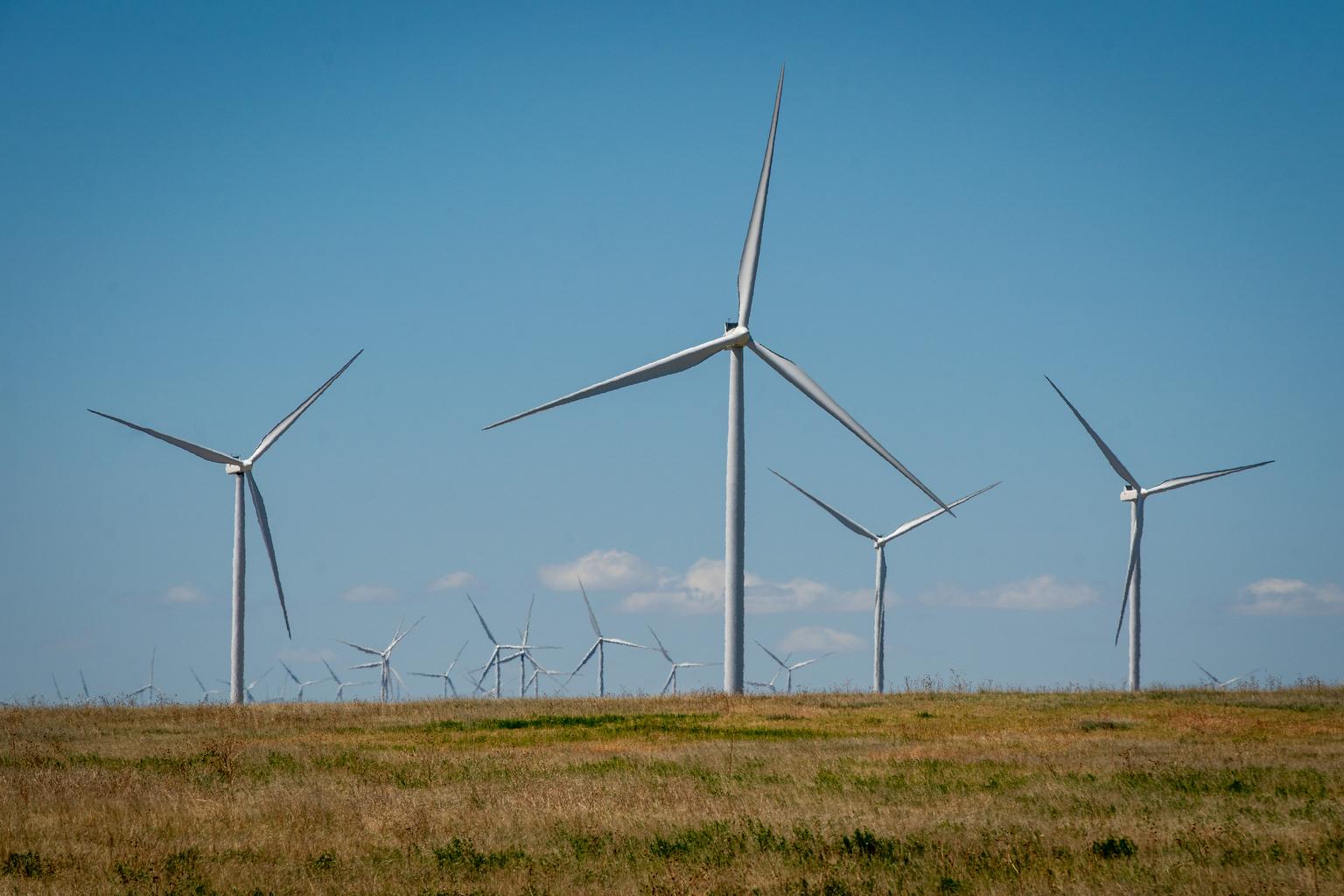
In February, state regulators at Colorado’s Public Utilities Commission approved a slate of 10 new energy projects which could generate enough electricity for hundreds of thousands of homes.
The projects will pump power onto Xcel Energy’s grid and are scattered throughout the state — from Adams to Weld to Lincoln counties. Most are renewable energy projects, such as wind, solar, battery-storage or solar farms combined with batteries. Some of them will help counties like Pueblo and Routt cover a fragment of lost tax revenue from closed coal plants.
Now the rubber meets the road.
The newly-approved projects have until July 4, 2026, to start significant construction or acquire specialized equipment, like transformers. That’s because the Trump administration phased out two clean-energy tax credits for wind and solar projects in the One Big Beautiful Bill Act, President Trump’s landmark domestic policy law.
Meeting the Independence Day deadline allows projects to gradually finish construction and tap into the credits, which can lead to millions in savings for the companies.
Those savings are vital — they can be the difference between a project being built or dying on the vine. In Colorado, taking advantage of the credits will prevent Xcel customers from footing more than $3 billion in extra costs, which would otherwise increase utility bills.
“Time is very much of the essence, and I think it’s going to be really, really important to avoid delays on any of these projects getting built,” said Ellen Kutzer, general counsel at the Colorado Solar and Storage Association, a trade group.
Some projects have already cleared the threshold to take advantage of the credits. Others are likely applying for permits or finalizing equipment contracts, with 122 days left until July 4.
Xcel and state officials expressed confidence that the gambit would work.
In a statement, a spokesperson for Gov. Polis said he was “thrilled to see that new, efficient energy plans were approved to help create more affordable and reliable energy for Colorado, allowing companies to take advantage of federal support before it expires.”
A speedy “Near Term Procurement”
Last year, President Trump was explicit that the One Big Beautiful Bill Act should cut government support for wind and solar power, calling them “unreliable” and labeling the credits “handouts.”
The new law phased out the Clean Electricity Production and Clean Electricity Investment credits for wind and solar, which could shave off up to 50% of a project’s cost.
The caveat is that if developers start significant construction on wind and solar projects by July 4, 2026, they can still qualify for the expiring credits, per guidance from the Treasury Department.
If they meet that deadline, they then have until December 2030 to finish construction and send power to the grid — a doable timeline, according to Kutzer.
But if projects start construction after July 4, they have to be fully up-and-running by December 2027 to qualify for the credits. That’s likely too little time for a big solar or wind farm to secure permits, buy equipment and wrap construction.
“For these large utility-scale installations, it’s not really possible to move that quickly,” Kutzer said.
After the passage of the One Big Beautiful Bill Act, Gov. Polis and several state agencies sought to fast-track approval and construction of future renewable projects in order to capture billions of dollars of expiring credits. They proposed their plan to the PUC in August 2025.
The PUC’s announcement of the new projects in February capped off a furious sprint to review and greenlight select renewable projects.
That timeline was significantly faster than the normal pace of business. It often takes years to approve and start construction on large energy projects; this took around six months.
Regulators considering the plan clearly struggled with the lengthy, technical questions required to evaluate bids for new solar, wind and natural gas projects, while under the gun of a looming deadline.
The PUC is now weighing whether to approve additional solar and wind projects as part of the procurement.
Challenges ahead for projects
Many details about the 10 new energy projects remain confidential. At least three of the projects will be located in Morgan, Pueblo and Routt counties — “just transition” communities that will suffer tax and job losses when Colorado’s remaining coal plants close.
Other details — like the names and developers of projects — will start trickling out as companies apply for local permits to start construction.
For instance, a wind project under development by NextEra Energy in Pueblo, known as the Mirasol Energy Center Project, matches a project approved in PUC documents.
NextEra did not respond to a request for comment about whether their project is part of the procurement or whether it believes it has qualified for the credits.
Projects are also contending with other rules set by the Trump administration. One requirement dictates that a certain percentage of components must be domestically manufactured.
Another rule says that “foreign entities of concern,” like companies based in China, can only manufacture a certain percentage of components for a wind or solar farm. That could pinch supply chains, since many components are manufactured abroad.
Those headwinds are increasing the cost of electricity produced by wind and solar. But analysts still expect utility-scale solar and on-shore wind to produce some of the cheapest electricity in America, even without the credits.