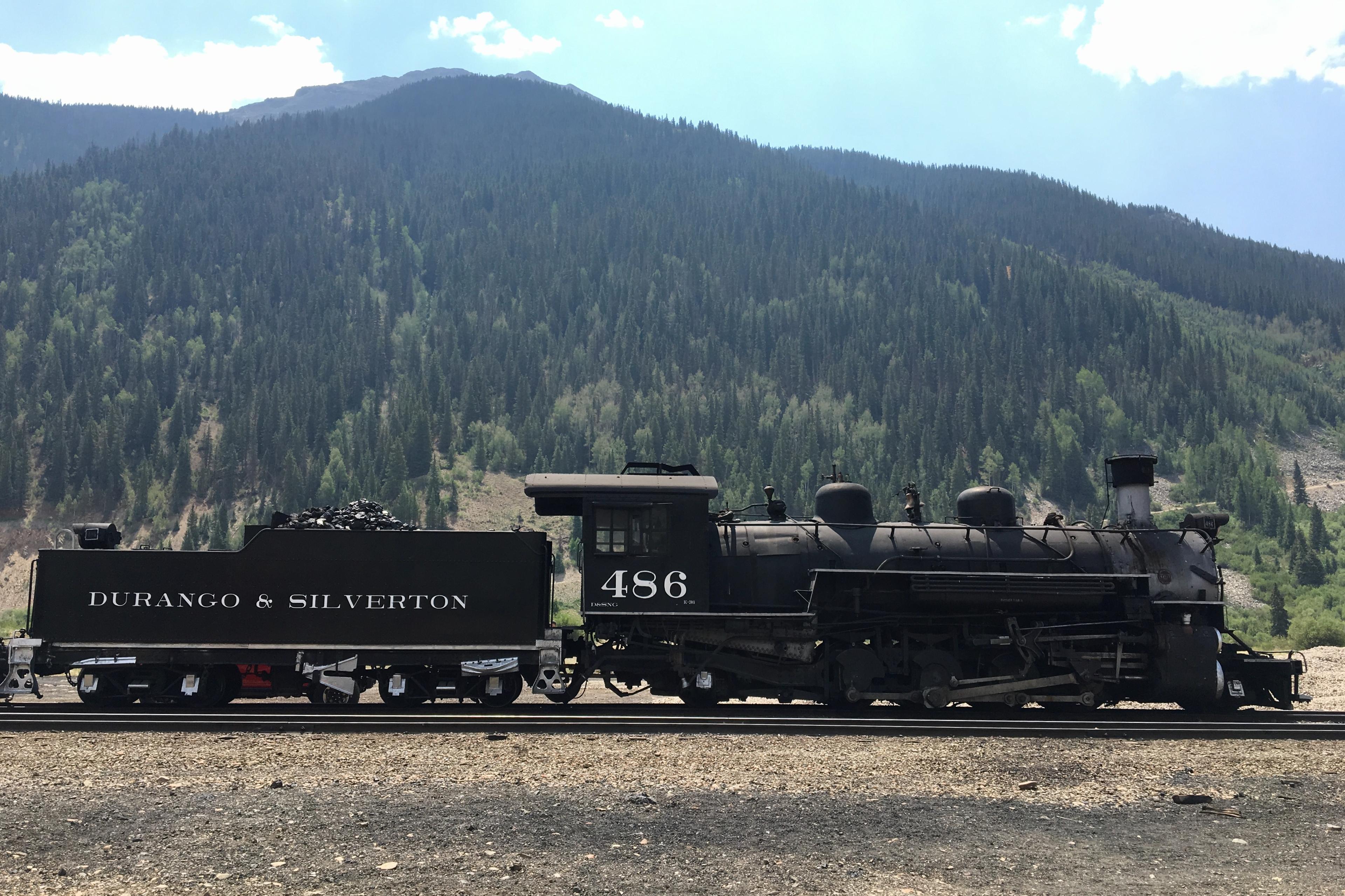
Narrow gauge, wide reach

Before trains, the way to and from Colorado’s remote mountain mines was by donkey. Smaller than horses, sure-footed, and able to twist up steep trails, they hauled ore where wagons couldn’t go. In the same way, standard railroad tracks were simply no match for tight canyons, sharp curves and grades. But in 1870, William Jackson Palmer had an idea: use the more nimble narrow-gauge tracks — two-thirds the regular width. Within a decade, Palmer’s Denver & Rio Grande Railway stretched from Pueblo, through the Royal Gorge, over Marshall Pass, to Salida, Gunnison, Montrose, Durango, and Silverton. Much faster to get silver and gold to market. The network that fueled the state’s growth lives on in the Durango & Silverton Narrow Gauge Railroad. A remnant of Colorado’s early economic expansion, one narrow track at a time.
About Colorado Postcards
Colorado Postcards are snapshots of our colorful state in sound. They give brief insights into our people and places, our flora and fauna, and our past and present, from every corner of Colorado. See more postcards.


