
Roughly 40 years after farmer John Harold introduced Olathe sweet corn to the world, he and his family are scaling back their growing plans for a crop that’s become a symbol of the Western Slope.
The first family of Olathe sweet corn is charting their own path without the grocery giant Kroger. They just don’t know where it will take them.
While Olathe Sweet™ (yes, Harold owns the trademark) sweet corn won’t be available at a King Soopers or City Market near you, the family said, they will still sell their beloved corn throughout the region this summer — just in a more personal way.
Harold, who started this whole sweet corn craze, explained that his Tuxedo Corn Company will sell their bounty in various communities in Colorado and beyond. But they’ll do it directly — by setting up stands in parking lots and taking online pre-orders to help gauge demand.
Consumers can also purchase corn at the company office, known as “the cooler,” just outside of Olathe on Highway 50. Buyers from regional markets can buy directly from the company, as well.
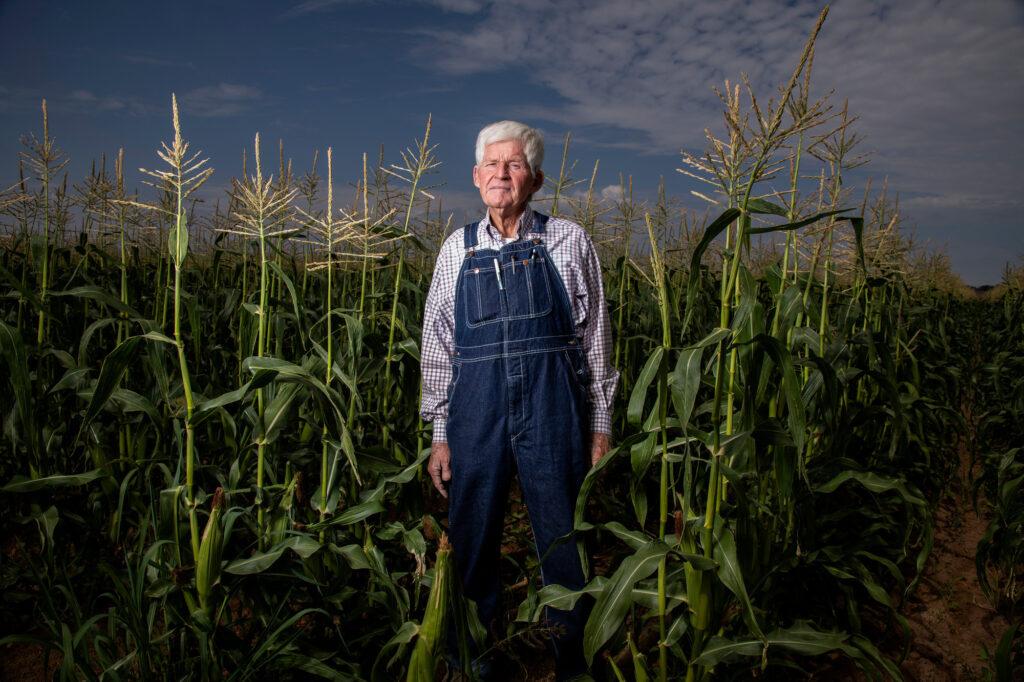
“So it's not like we're going to quit, but we are going to quit a national chain,” Harold said.
Drought, a years-long pest problem — along with labor issues and tariffs — all played a part in the choice to pare down their farming, at least for now. The Harold family is hoping their customers will stand by them and seek them out. While there are other sweet corn growers in the Olathe area, they have long been the biggest.
“We feel we have developed a brand that’s unique,” said the 85-year-old, bundled up against an unexpectedly cold April day.
He was sitting next to his 46-year-old son, David, whose home is surrounded by the farmland outside of Olathe, fields still empty from winter. The pair have worked together for about 20 years in the family business.

Farming is “riskier now than it’s ever been,” David Harold explained. He sees immense pressure from an unrelentingly demanding food system being placed on family operations like theirs. Trying to solve the puzzle of how to make their corn and business succeed has motivated him to be daring.
“And so it's appropriate for us to be thinking in these terms,” he said, of the direct-to-customer strategy. “It really is mandatory, and we've talked about it for years.”
The “farm to table” movement has grown significantly over the past decade, as small farmers struggle to compete in a global marketplace. With more consumers demanding locally-grown food, growers have capitalized on direct sales to consumers, cutting out the middlemen.
Even with so much uncertainty, David Harold said he now “feels better” about going to work than he has in a long time.

How Olathe became the sweet spot for Colorado corn
John Harold started the Tuxedo Corn Company in 1986 using a type of corn developed by a corn geneticist named David Galinat, known as the “Corn King.” Olathe’s hot summer days and cool nights helped lock sweetness into the kernels. Harold started selling the corn around Montrose, and as he remembers it, word somehow got back to Kroger headquarters.
Harold said that one day he was greeted by a Kroger representative who’d driven all the way from McAllen, Texas, to learn more about the corn. Soon, the small-town farmers’ corn was being sold in their stores. (Kroger did not respond to multiple requests for comment.)
“And so Kroger's been an integral part of it, darn near from its inception,” Harold said.


In the decades since, Olathe sweet corn has become world famous, even inspiring its own festival and being sold in grocery stores and fancy restaurants alike across the country. Harold said that at its peak, Tuxedo Corn shipped about 700,000 boxes, each containing four dozen ears.
“I was pleasantly surprised, but I sure didn't forecast it,” Harold said, of this decades-long success.
In a culture where people can buy pretty much any type of produce year-round, Olathe sweet corn’s short window of availability makes it even more prized. Every summer, Kroger stores have trumpeted its return, usually sometime in July. By Labor Day, the season’s typically over.
The delicacy is also famous for the delicate ways it must be treated. Harold makes sure ears are picked by hand and plunged into an ice bath to help develop their sugary taste.
Harold explained that the things that make this crop special haven't changed.
“We still have a corn that has flavor, sweetness, tenderness,” Harold said.
But for now, they will just harvest a lot less of it.
Feeling ‘hopeful’ about the future of Olathe Sweet™ sweet corn
For the last few years, the Harolds have collaborated with fellow farmers from around the world to learn methods for defeating an itty-bitty but hugely destructive foe: the corn earworm. While Tuxedo Corn offers its product in a more limited supply, “we're still going to work our butts off trying to figure out — how do we efficiently get rid of the pest,” John Harold said.
One of his sons went on to grow sweet corn in Mexico and is planning to visit Colorado this summer to try to help his father solve the worm issue, and the family will continue their practice of planting flowers to attract “beneficial insects” that eat the moths.
David Harold explained that his family is also trying alternative ways of farming, including how to use less water. About a decade ago, he and other local farmers formed a group called No Chico Brush, aimed at preserving water and improving soil health. The company is also part of the Fair Food Program, which supports fair wages and good work conditions for farm workers.
“I'm 100% convinced people want what we're doing, and we need to tell them about what we're doing and why we're doing it,” the younger Harold said, “and we need to engage better.”
That engagement will be at the center of this new way of doing business, since the company’s success will no longer be tied to a national chain.
“It's uncomfortable, it's scary,” David Harold said, “but it's also exciting and hopeful.”

His dad, the guy who started all of this, explained that pre-order sales will tell them a lot about whether this new direction is popular with sweet corn fans.
“We will find out in a short period of time on our website whether people want us to show up in the metro from Wyoming to the New Mexico border with our sweet corn — that will tell us that we're doing the right thing,” John Harold said.
But he is comfortable with the decision, and so is his whole family, including his wife and three sons.
“And that's good enough for me,” he said.
Optimism is a “very farmer thing,” his son added. “You always are thinking next year you're going to figure something out, you're going to make a change, you're going to do something that's going to make it better.”
Pivoting is just part of the job of farming, the only job David Harold wants to do.
“We need to go a different direction,” he said. “And that's exciting, and it's fun.”