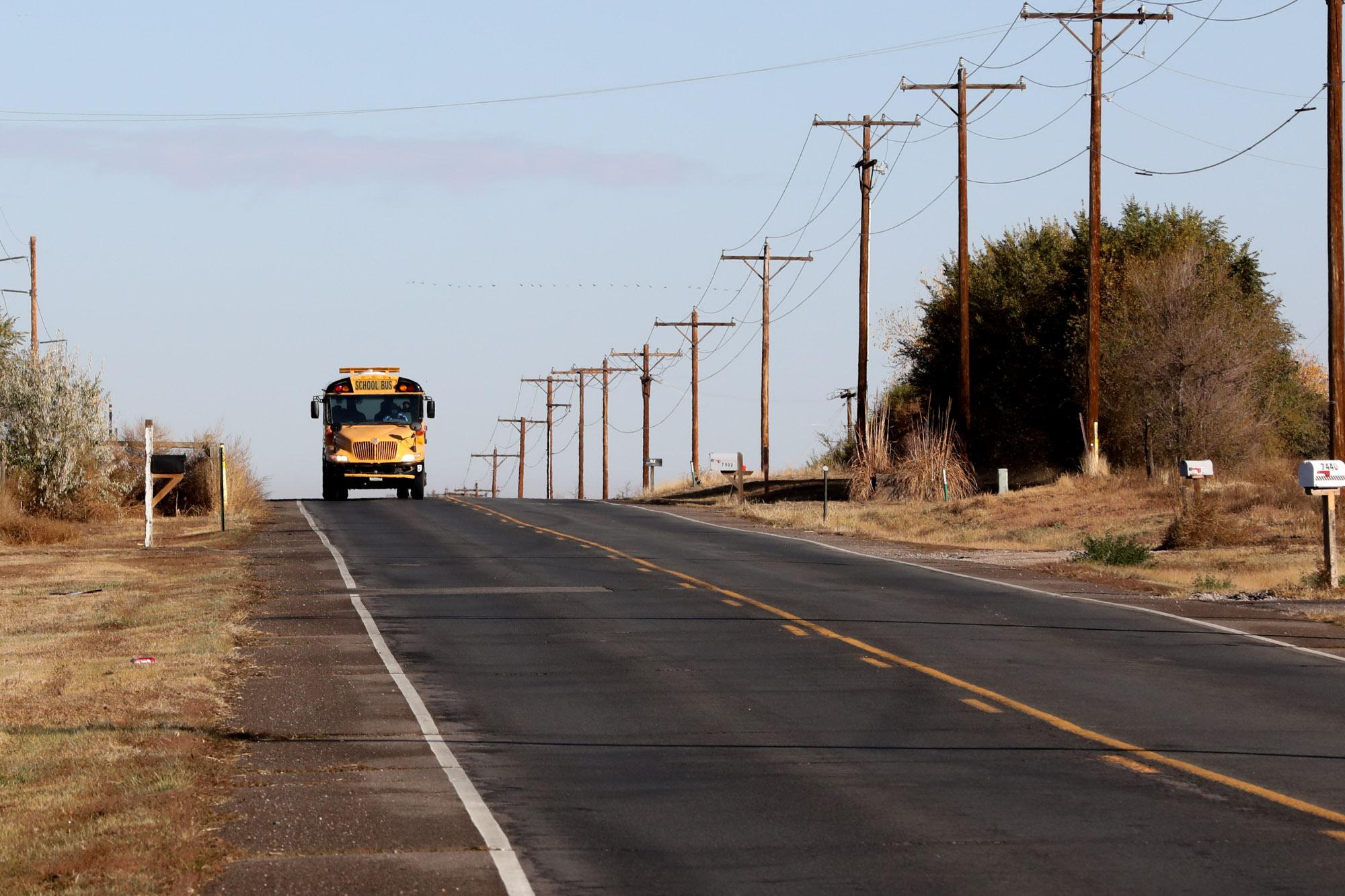
Lenae Lengel’s school district near the Kansas border may not have the bells and whistles of a larger school district, but it has a unique advantage that helps students succeed.
With only 155 students, Lengel often knows her students long before they enter her classroom. She taught their older siblings, watched them as toddlers at Friday night basketball games, and worked alongside their preschool teacher in the same building.
That familiarity, she says, helps teachers respond to students in ways impossible in larger systems.
Small rural school districts like Lengel’s are also what’s keeping communities across Colorado alive, despite severe barriers like staffing shortages, housing pressures and state systems that often hinder their progress, according to a new report from the Keystone Policy Center.
Lengel is one of the rural educators featured in the report that highlights a paradox: Small rural school districts deliver academic and social outcomes and community value, but Colorado’s one-size-fits-all education policies often undercut their ability to survive.
“How we treat a school district with 200 kids is the same way that we treat a school district with 90,000 kids. That just doesn't make any sense,” said Van Schoales, senior policy director at Keystone Policy Center. “We need to rethink some of that.”
Small districts, big presence
More than 80% of Colorado's districts are rural, serving 16% of the state's students.
The report profiles districts operating with limited staff and resources but strong local relationships and student outcomes that rival or surpass statewide averages.
“In a small school, we know our kids; they get to know us,” Plateau Valley Superintendent Trevor Long told the report’s authors. “No one falls through the cracks.”
Kindergarten teacher Lengel said the small classes allow for frequent one-on-one instruction.
“I know so much about my students before they ever even come to my classroom, which really sets me up to work with them in a way that’s going to be most effective,” Lengel told the report’s authors.
Small enrollments mean "no tryouts," North Park Superintendent Amy Ward said in the report. Every student is needed for sports, clubs, and leadership roles. That pushes students to develop confidence and explore interests they might not have in larger schools.
“We support kids probably better than any district I’ve ever been in,” Ward said in the report.
“We are family.”
While small classes can limit brainstorming, rural districts have higher graduation rates — hitting 100% in Idalia, a small town about two and a half hours east of Denver. Though the report also found lower average test scores on state assessments, rural districts also have higher rates of participation in career and technical education and comparable college matriculation rates.
Community impact
North Park’s 1949 gym hosts everything from bingo to funerals. Plateau Valley recently opened a new $66.6 million school building with state and local support, and district leaders say it serves the whole community, not just students.
In Idalia, Superintendent Kristi Minor said game nights show the school’s importance.
“The community recognizes that the school is the heart of the community.”
Dawn Thilmany, a professor of agricultural economics at Colorado State University, said that schools and health care are the two most critical factors in a small town’s ability to sustain itself. They’re also a primary economic anchor, providing middle-income jobs.
When schools close, towns often wither. After the town of Arriba’s school was consolidated with a neighboring town in 1983, it began to fade, with houses being abandoned as the town’s social hub vanished, according to the report.
Small districts also face significant challenges
Staffing and turnover are continual challenges in small rural districts. The average salary in Idalia is $46,149 compared to the $63,000 state average.
To recruit teachers, rural superintendents often pitch the four-day work week and access to outdoor recreation. Even when a teacher is hired, finding housing is a barrier, with rent taking an unsustainable percentage of a teacher’s take-home pay. The North Park district owns two trailers to house staff.
Many rural districts are finding teachers through “grow-your-own” programs that let residents or classroom aides earn teaching credentials through alternative licenses. The state now offers about 20 different routes to teacher certification.
Reporting burdens and policy issues
A big complaint in small rural districts is the volume of state reporting requirements. Districts must submit more than 200 annual reports. Frank Reeves with the Colorado Rural Schools Alliance says many are never even reviewed. Superintendent Minor says compliance work consumes 75% of her staff’s time.
State officials acknowledge that reporting requirements are onerous but note many are legally mandated by state or federal law. While they say they are continuously working to improve the system, legislative efforts to reduce the reporting burden have had only partial success. And Colorado’s system of local control complicates efforts to streamline data collection.
Rural Schools Alliance director Denille LePlatt argues that "one-size-fits-all" state policies often hinder rather than help rural districts. For example, the state’s READ Act identified fewer struggling students than her previous district’s more rigorous internal standards. Similarly, GIS-based poverty mapping can’t locate homes with unlabeled streets, causing districts like North Park to lose critical funding. It undercounted poverty despite 64% of county children living below the line.
Fiscal challenges
Rural districts also face several big financial challenges. Losing even a few students causes major funding drops – yet the district must still staff a classroom or pay for long bus routes.
Superintendents say small districts also lack the capacity to write the competitive grants the state relies on. The report quotes a CDE official as saying the state has shifted some grants to a system that distributes money directly to districts that meet certain criteria. The department also has a staff member whose role is to review every major policy decision through a “rural lens.”
Ken Haptonstall, co-executive director of the Colorado BOCES Association, warned of a "fiscal cliff" ahead, urging districts to cooperate more closely through Boards of Cooperative Educational Services (BOCES) to share resources like transportation or special education specialists rather than waiting for district consolidation to be forced on them.
“My message to both legislators and to superintendents is you better figure out how to cooperate, whether that’s through a BOCES or it’s just you call up your neighbor and say, hey, we don’t both need a transportation director,” he said in the report.
Report recommendations
The report advocates for a tailored approach to Colorado’s rural schools, viewing them as essential community anchors rather than marginal systems.
Key recommendations include reducing reporting burdens, implementing statewide teacher salary minimums, and providing housing support.
“It is really important that the governor and the legislature and other policymakers take a close look at how we can be smarter around supporting (rural districts) to thrive,” said Schoales, such as allowing them to waive out of certain reporting requirements.
The report suggests adopting models like Texas’s “Rural Innovation Zones” or more collaborations like the Southwest Colorado Education Collaborative, which brings together groups of rural districts, industry and specialized career pathways. It calls for Colorado to look to states like Wyoming, Iowa, Alaska and Nebraska that provide special support for rural schools that are less dependent on local property taxes.
After 30 years in urban policy, Schoales said the report impressed upon him how vital rural schools are to community survival.
“We just sort of take them for granted in terms of where our food comes from and our culture, which is also connected to these places even though we don't see it when we're in Denver.”